
Unwritten
Remembering the art of journaling in a world that no longer pauses

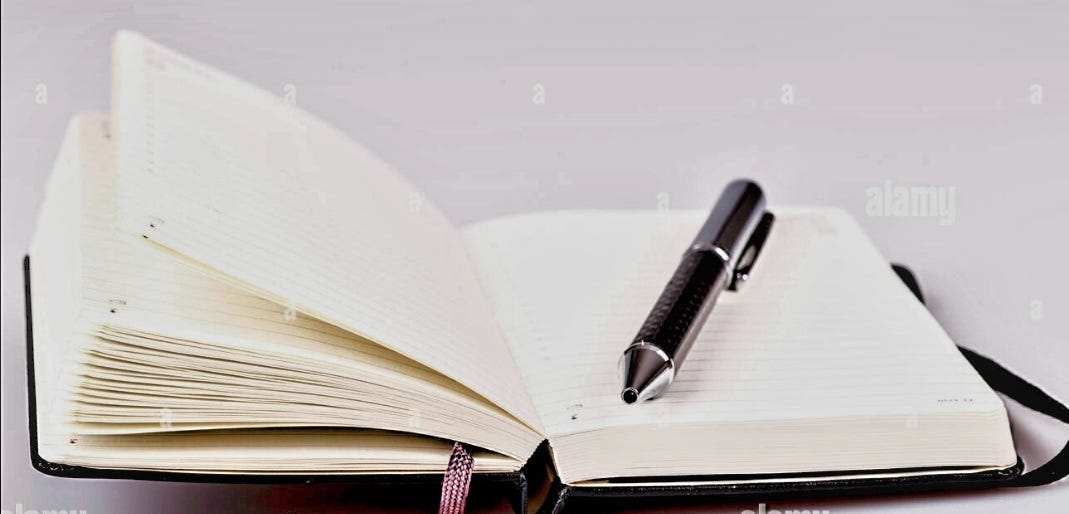
At the beginning of this year I started writing a journal. The last time I had made an attempt at such a thing was when I was a teenager. It was hardly a journal though, just a diary with a tiny space devoted to each day. I think I maintained it for a few months before thinking how pointless the exercise of writing four lines for each day was. The journal gave me much more room to expand and elaborate. However, I have to admit that it became a chore, a burden, rather than something I enjoyed it became another item on my ‘to do’ list. The last entry was dated July 29 . After that, nothing. Blank pages. Silence. It gave me pause for thought. Not because I had “failed” at journaling, but because it made me wonder: can anyone really keep a journal these days?
There was a time when journaling felt like a natural extension of living. You experienced something, you went home, and you wrote about it. It wasn’t content. It wasn’t optimized. It wasn’t meant for an audience. It was a private conversation with yourself. Somewhere along the way, that practice began to fade—like sending handwritten letters or memorizing phone numbers. Not entirely forgotten, but given a gentle push towards the substitute bench as social media invaded the playing field.
We live in a world built on immediacy. Thoughts are posted the moment they arise. Emotions are filtered through captions and emojis. Experiences are documented not for memory, but for visibility. In many ways, social media has become a kind of public journal—a running log of moments, opinions, milestones, and moods. It asks, What are you thinking? What’s happening? and rewards you for answering quickly.
So maybe the real question isn’t whether journaling still exists, but whether it has been transformed. And if so, what was lost in that transformation?
Traditional journaling was slow by design. You had to sit down. You had to be still. You had to listen long enough to know what you actually thought, not just what you felt in the first ten seconds. There was no algorithm nudging you toward outrage or affirmation. No likes to validate the entry. No sense of performance. You could contradict yourself. You could be messy. You could write something today and disagree with it tomorrow—and no one would ever know unless you returned to the page. You could also use it as a sounding board, a silent friend to whom you confided your fears, your hopes, your wishes. Lost in the movement of your hand on the paper you could also find resolution to life’s challenges. You just had to become attuned to the echoes rising from the spaces between the words
That privacy mattered. It created a safe container for honesty.
When journaling moves into public space, something subtle shifts. Even if we tell ourselves we’re “just sharing,” there is almost always an audience in mind. We edit. We curate. We shape the narrative. We become characters in our own stories rather than witnesses to them. Social media doesn’t ask, What’s true for you right now? It asks, What will resonate? What will land? What will be understood quickly?
And yet, it would be unfair to dismiss this entirely. For many people, posting is a form of reflection. It helps them mark time, process experiences, and feel less alone. In a fragmented world, shared journaling can become connection. There is value in that. There is comfort in knowing someone else sees your words and nods in recognition.
Still, I can’t shake the feeling that something essential happens when we stop writing only for ourselves.
A private journal doesn’t rush you. It doesn’t care if you fall silent for weeks or months (obviously mine did not run from my grasp after such an absence). When you return, it doesn’t scold you—it simply waits. Those blank pages after July weren’t an accusation; they were an invitation. They reflected not laziness, but the reality of life intervening.
Is journaling important? I think so—but maybe not for the reasons we usually give. It’s not just about preserving memories or tracking personal growth. It’s about creating a space where you don’t have to be legible, impressive, or coherent. A space where thoughts can arrive half-formed. Where you can admit confusion without resolving it. Where you can tell the truth without softening it for consumption.
In a world of instant gratification, journaling offers delayed understanding. You might not know what something meant when you lived it. Writing gives meaning time to catch up. It slows life down just enough for patterns to emerge—patterns you’d miss if everything stayed fleeting and scrollable.
Can we be expected to maintain journals in the world we live in today? Maybe not in the rigid, daily, perfectly consistent way we imagine. Maybe the expectation itself is the problem. Journaling doesn’t have to be a streak. It doesn’t have to be disciplined or aesthetic. It can be seasonal. It can be sporadic. It can disappear for months and return when needed most.
The old journal I opened didn’t end in July because the story was over. It ended because my attention shifted. And maybe that’s the quiet reminder: our inner lives need tending, or they go undocumented—not erased, just unexamined.
Perhaps journaling now matters more than ever, precisely because it resists the speed of modern life. Not as another task to optimize, but as an act of choosing depth over immediacy. Silence over noise. Listening over broadcasting.
So no, maybe not everyone can keep a journal these days. But anyone can return to one. And sometimes, that return—pen to page, no witnesses, no urgency—is enough to remind us who we are beneath all the updates.
And so I picked up the journal and wrote, Sunday December 14, 2025…
Yet another piece that tore through my stomach and went straight to my gut!
About choosing social media over journaling...Yes, we look for needed connection, and sometimes it happens. But when you make a post that is so meaningful to yourself...so very important, and do not receive the response...not a good thing. Can cause some nasty feelings. I recently deleted such a post on Substack. I knew I would not get the response from who I wanted to respond.
So, that is where Journaling comes in. The ability to write the meaningful thoughts...feeling...without the anger and upset of not getting a response. To respond only to yourself, for YOU being the one who understands, and to provide growth from the insight.
Thank you once again for your insight and the phrasing of your thoughts!
Such interesting reflections. I especially love: “Writing gives meaning time to catch up.” A beautiful, philosophical insight. Thank you, Lee.